
Precious metals. Defined responsibilities.
Gold and silver mine security.
AISIS and VASIS support trained investigative professionals conducting structured interviews about material losses, processing handovers, secure storage, and transport discrepancies.
Request presentation access- Material custody
- Clarify who handled a defined lot, shipment, or transfer and what each person observed.
- Examiner direction
- Trained professionals prepare the examination and interpret observations in context.
- Independent checks
- Test interview leads against records and technical evidence before reaching conclusions.
Operational applications
Clarify the account behind a material discrepancy.
A shortfall is a question to investigate, not a finding of misconduct. Security personnel may need to understand a movement of ore, a concentrate shipment, a doré bar transfer, or an unexplained entry into a restricted facility. The useful starting point is a specific event, supported by the records available to the investigation.
For gold operations, the World Gold Council describes transparency between mine production and doré refining. Security interviews address the people and handovers within that chain. They do not replace the records that establish where material originated, who received it, or how it was accounted for.
AISIS provides AI-assisted review of stress-related vocal information. VASIS provides VIPRE's established voice stress technology. Both have a supporting role in examiner-led questioning, helping define responses that merit clarification rather than treating an indication as an answer to the investigation.
Potential interview topics
- Reported diversion of ore, concentrate, doré, or other precious-metal-bearing material
- Unexplained differences in dispatch, receipt, weighing, or secure-storage records
- Seal irregularities, undocumented transfers, or disputed custody acknowledgments
- Unauthorized entry into processing, sampling, storage, or dispatch areas
- Suspected internal collusion involving employees, contractors, or transport personnel
- Conflicting accounts of a security incident, changed instruction, or procedural exception
Technical review first
A production variance is not a verdict.
Before questioning personnel about suspected loss, establish what the reported difference actually represents. Confirm the relevant material, reporting period, units, and records with the responsible technical personnel. Do not turn an unresolved measurement or reconciliation issue into a personal allegation.
Where sampling, moisture, assay, weighing, or timing requires explanation, obtain that explanation from appropriately qualified specialists. The examiner should understand which facts are established and which remain under review. Voice stress software cannot determine whether a laboratory result, production estimate, or accounting adjustment is correct.
Build questions around the person's direct responsibilities and knowledge. A dispatch operator may explain a seal entry; a driver may explain a route deviation. Neither should be expected to answer for a process or measurement outside their role.
- EstablishDefine the material, time window, discrepancy, and status of the technical review.
- ClarifyConduct structured interviews about specific actions, instructions, and observations.
- TestCompare each new detail with independently obtained records and evidence.
Illustrative interview contexts
Follow the material. Separate the responsibilities.
A concentrate shipment arrives with a disputed record.
Identify the shipment and compare dispatch and receipt documentation before interviewing the people involved. Clarify who recorded the weight, checked the seals, authorized departure, and accepted delivery. If an interview introduces a changed container or an additional stop, treat it as a detail to verify through the available transport and custody information.
A doré transfer does not match the storage entry.
Work from the relevant bar identifiers, transfer acknowledgments, and access records. Ask each custodian about the particular handover rather than general access to the storage area. A reported late entry or substitute recipient calls for a documented check. Software output cannot authenticate a bar, confirm its composition, or establish who removed it.
A processing-area access event needs explanation.
Confirm the assigned task, authorized access, and reported time before examining an exception. Maintenance work, a changed shift instruction, or another legitimate explanation should remain open to verification. Ask what the person directly saw or did, then compare the account with work orders, access logs, and other relevant information.
These are potential investigative applications, not claims of customer deployments or results. They are not examination scripts. Formal procedures, participation requirements, and question formulation remain the responsibility of trained examiners and the organization authorizing the work.
Two current VIPRE products
AISIS advancement. VASIS capability.
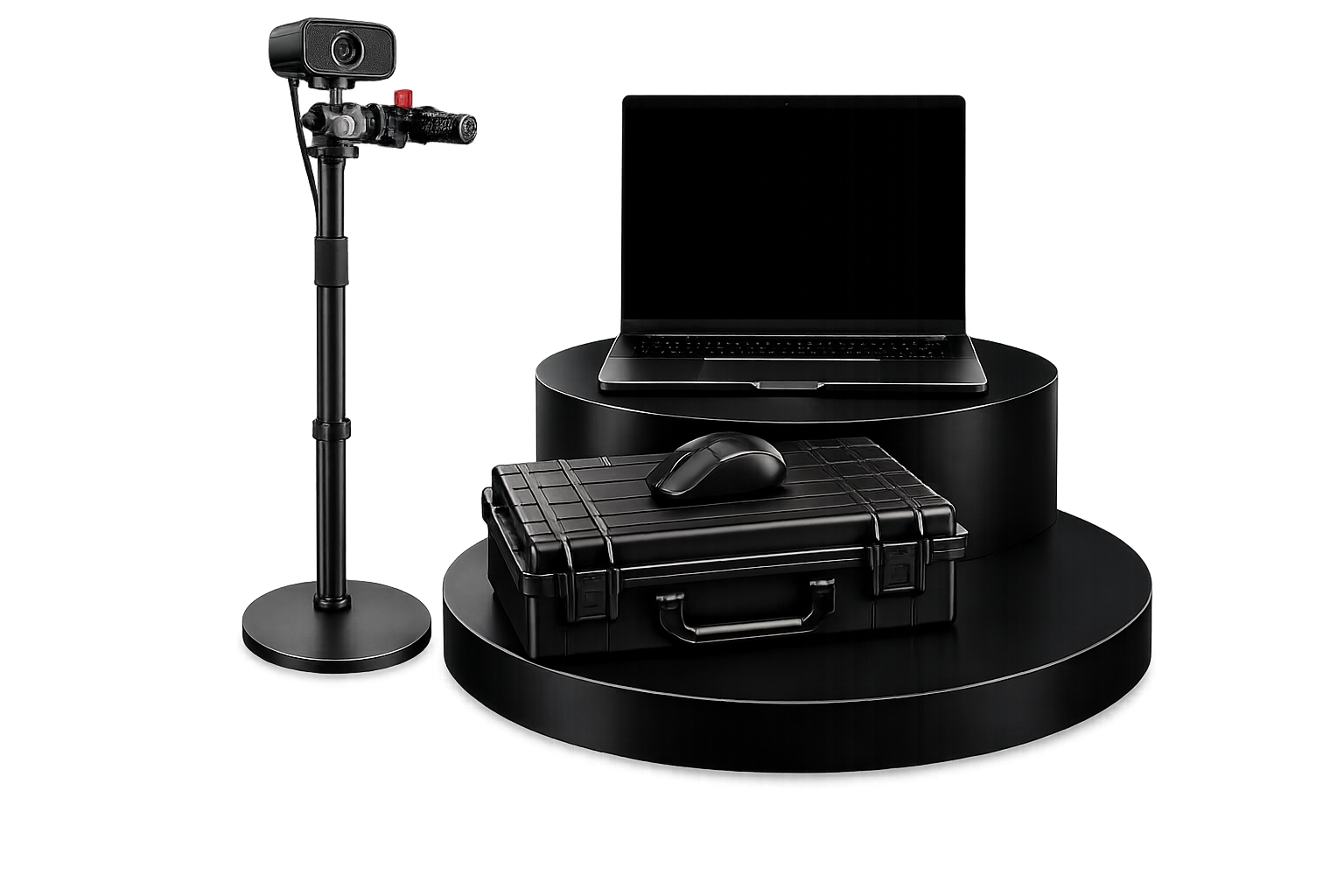
AISIS is VIPRE's AI-assisted stress identification system. Its portable, microphone-based configuration supports structured interviews at a suitable mine security office or other authorized location, without attaching physical sensors to the person being interviewed.
VASIS remains a current, valued VIPRE product with more than 20 years of operational use by trained investigative professionals. Its established voice stress capabilities remain available alongside AISIS for teams reviewing VIPRE's two product options.
Discuss your team's interview responsibilities, examiner experience, and operational setting with VIPRE when reviewing the products. Neither system replaces inventory controls, a technical investigation, or the professional judgment required to interpret the interview.
Responsible examination
Keep observations separate from findings.
Voice stress indicators do not independently establish truthfulness, deception, theft, or guilt. Interview conditions, anxiety, the significance of a question, and other contextual factors require consideration. An elevated indication is not proof of involvement; an apparently calm response is not proof that no incident occurred.
Select an interview setting away from processing noise, interruptions, and unnecessary observers. Confirm recording quality, microphone placement, language needs, and the interviewee's understanding. Portability is useful, but it does not make an unsuitable recording environment acceptable.
Define authorized use, participation procedures, access to recordings, and supervisory review before introducing examinations. Neither product should be used as an automatic hiring, access, or disciplinary decision. Reports should distinguish the person's account, the examiner's observations, and independently verified information. Where evidence does not resolve a lead, report it as unresolved.
Professional preparation
Training connects the system to the investigation.
VIPRE offers a 40-hour basic examiner certification program, with online training available. Preparation covers system operation, examination procedures, question formulation, chart evaluation, and examiner responsibilities.
Identify who will conduct examinations and who will review their reports. Connect examiner preparation to the mine's incident-handling procedures, technical specialists, and evidence records. Operational support is available for qualified users, while examiner responsibility remains central to every application.
From a disputed transfer to a specific verification task: the goal is a clearer investigative record, not an accusation generated by software.
Frequently asked questions.
Can AISIS or VASIS determine whether a material shortfall is theft?
No. Neither system measures metal content, validates production figures, or establishes theft. Voice stress observations may support clarification during an interview, but a discrepancy requires independent technical review and evidence. A stress indication does not establish deception or guilt.
Can both gold and silver security teams use these systems?
Both products support trained examiners reviewing defined security incidents and custody questions at gold and silver operations. The interview must reflect the actual site's production process, material form, records, and personnel responsibilities. A concentrate shipment and a doré transfer require different preparation.
Do these systems replace laboratory testing or metal accounting?
No. Assay results, weighing, sampling, reconciliation, and technical expertise remain separate and essential. AISIS and VASIS support examiner-led interviews. They do not resolve metallurgical uncertainty or certify the quantity or quality of a shipment.
How can our team review both products?
Request a link and password access to the AISIS online informational presentation using the form below. A separate VASIS informational video is available on request. State your interest in either or both products in the questions field. VIPRE reviews requests before providing access.
Online software presentation
Request software presentation access.
Request a link and password access to the AISIS informational presentation. Describe your gold or silver operation and the investigative applications your team would like to review in the questions field.
A separate VASIS informational video is also available. Note your interest in VASIS when requesting access. VIPRE reviews each request; submission does not automatically provide access.