
Security teams. Informed follow-up.
Security Intelligence
Support security intelligence with structured interviews, examiner-led review, and a documented record. AISIS and VASIS help trained professionals examine responses in context.
Request information ›Turn a security concern into a focused inquiry
A missing asset, an unexplained access event, or conflicting accounts can leave a security team with several possible explanations. The immediate task is to establish what is known, identify gaps, and decide which questions need a documented answer. Security intelligence becomes useful when information can be connected to a specific event, reviewed by responsible professionals, and tested against other evidence.
VIPRE supports the interview component of that work. AISIS and VASIS provide voice stress analysis workflows for trained investigative professionals, agencies, and examiners. Their role is to support review of an examination within a wider inquiry. They do not replace intelligence analysis, establish intent, or produce an independently verified account of an incident.
Define the question before selecting the system
Start with an operational question your team can investigate. Who handled the equipment during a particular shift? Which handover does the record fail to explain? What does a witness know about an access discrepancy? A defined issue gives the examiner a basis for preparing an interview and gives the reviewing team a clear purpose for examining the resulting record.
- Describe the event, relevant time period, and information already available.
- Separate established facts, reported accounts, assumptions, and unresolved questions.
- Identify who will conduct the examination and who will review the findings.
- Decide which independent records or witnesses could confirm or challenge an account.
AISIS: connected review for investigative teams
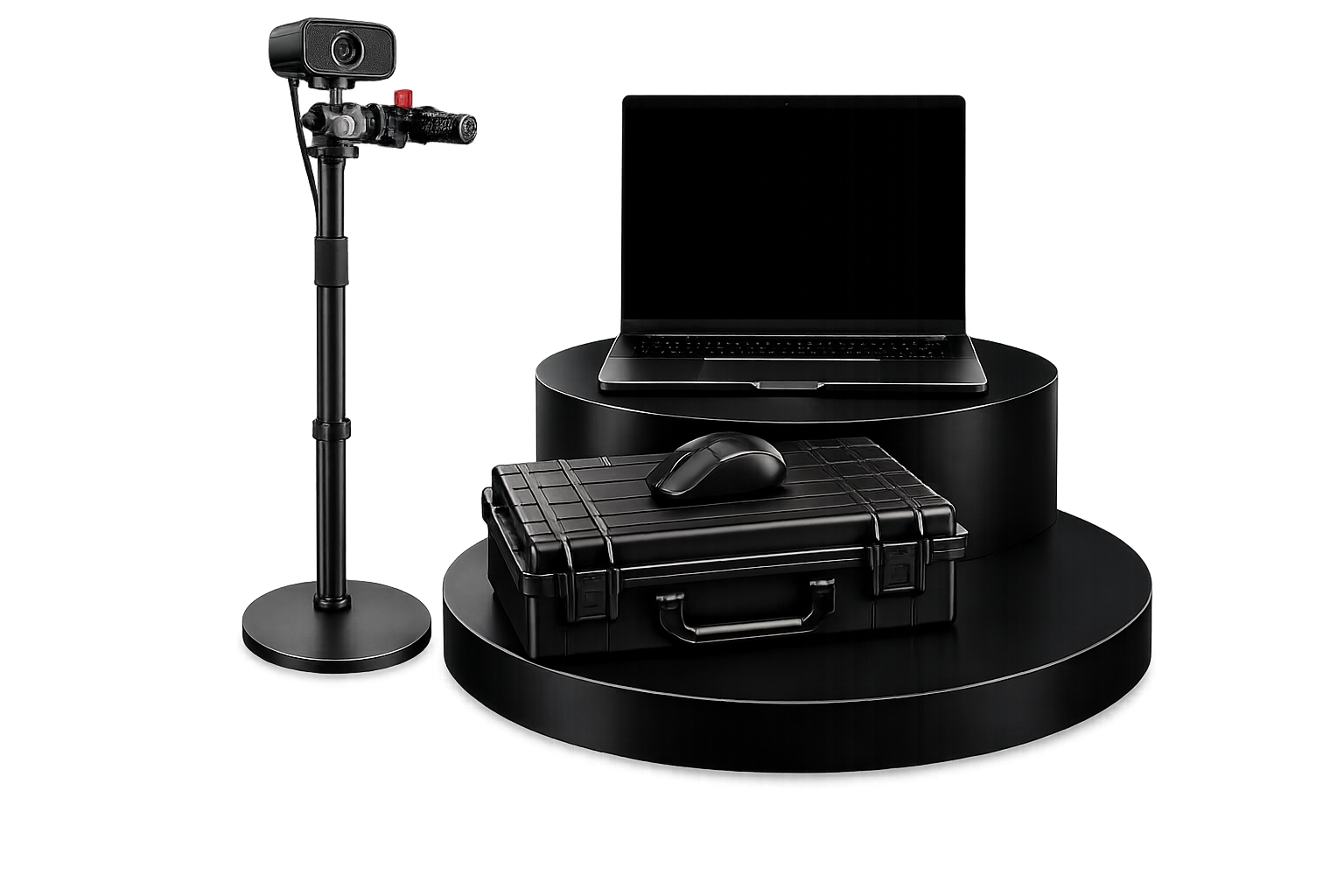
AISIS combines AI-assisted stress classification with synchronized waveform, audio, and video review. This gives an examiner a way to return to a response and consider the available recording together. During evaluation, ask to see how a question, the spoken answer, and the surrounding interview context are reviewed as part of the same examination.
For a security team, the practical consideration is whether this connected workflow supports its review and documentation requirements. The examiner remains responsible for interpretation. An AI-assisted classification is advisory information and does not establish deception, responsibility, or guilt. Evaluate the system against the tasks your team actually performs and the review standards it needs to maintain.
Explore the AISIS system ›VASIS: a focused examiner-led workflow

VASIS is a current VIPRE product offering a focused voice stress analysis workflow led by the examiner. It gives teams an additional option when evaluating a microphone-based examination system. Consider how the examiner prepares questions, captures the examination, reviews responses, and explains any follow-up in the context of the broader investigation.
Choose between AISIS and VASIS by reviewing the complete workflow, training requirements, equipment, and support available for the proposed deployment. Ask VIPRE to demonstrate the relevant tasks rather than judging suitability from a product label. Both systems require trained professional judgment, careful documentation, and independent corroboration of investigative leads.
Explore the VASIS system ›A practical interview-to-evidence workflow
The following sequence is a planning framework for a security inquiry. Adapt it to your agency's approved procedures and the circumstances of the examination. A consistent record helps the reviewing team understand what was asked, what was reported, and why a particular follow-up was selected.
- Prepare: organize the available records and define the specific interview issue.
- Interview: use the approved examination procedure and document the questions and responses.
- Review: consider relevant responses alongside the recording, interview context, and known limitations.
- Corroborate: compare potential leads with access records, inventory documents, witnesses, or other independent evidence.
- Report: distinguish observations, interpretations, confirmed facts, and questions that remain unresolved.
Where security teams may evaluate this approach
The interview requirement can arise across different security environments. The examples below describe possible inquiry contexts, not customer results or a guarantee that either system is appropriate for every assignment. Each deployment needs a clear purpose and a review of the applicable organizational requirements.
- Asset protection: clarify accounts surrounding a loss, inventory discrepancy, or disputed equipment movement.
- Access incidents: examine conflicting explanations about an entry, credential use, or restricted-area event.
- Insider-risk inquiries: review a defined incident without treating a role, personal characteristic, or stress response as evidence of misconduct.
- Contractor and handover inquiries: establish who reports handling an item and where the documented chain of events becomes uncertain.
Keep stress indications in context
A stress indication is not a finding that someone is lying. Interview conditions, individual circumstances, and the wider context matter. A response requiring closer review should lead to a considered question or an evidence check, rather than an automatic accusation. Equally, an absence of an indication does not independently verify an account.
Your reporting process should preserve those distinctions. Describe what the examination recorded, how the examiner interpreted it, what limitations apply, and which independent material supports any subsequent conclusion. Broader voice stress research should not be presented as product-specific validation of AISIS or VASIS. Review the published evidence and its limits when evaluating a proposed use.
Review voice stress analysis and its limitations ›Prepare the people and the operating procedure
A system demonstration should include more than the display. Discuss the examiner's training, question preparation, examination conditions, recording practices, supervision, and operational support. Agree who can review the material and how it will be handled within your organization's existing information controls. Confirm the current package and training arrangements directly with VIPRE.
Before an operational rollout, have the responsible decision-makers assess whether the proposed purpose, interview process, and record handling meet the requirements that apply to their organization. Product availability alone does not establish permission for a particular use. Plan for ambiguous findings and a clear route for escalating questions to a qualified supervisor.
Review Basic Examiner Certification ›Request a presentation around your security workflow
Tell VIPRE the type of security inquiry your team handles, the setting in which interviews take place, and the review requirements you need to satisfy. Ask to see the relevant AISIS workflow and discuss VASIS as a current alternative for examiner-led voice stress analysis. A useful evaluation connects the system to a defined operational task.
Bring practical questions about equipment, examiner certification, review procedures, and ongoing support. Keep the evaluation separate from any claim about a specific person's truthfulness. The goal is to determine whether the workflow can support your trained professionals within a documented, evidence-led security process.
Request presentation access ›Explore criminal investigation applications ›Explore diamond mine security applications ›Frequently asked questions
01Is this a threat intelligence feed or monitoring service?+
No. This page describes the interview and examination role of AISIS and VASIS within a security inquiry. The systems are not presented as an external intelligence feed, a surveillance service, or a substitute for independent evidence gathering.
02Can a stress indication identify an insider threat?+
A stress indication does not identify a threat or establish misconduct. Trained examiners must review it in context, and any investigative lead requires independent corroboration. Security decisions should follow the organization's approved process.
03Which system should our team evaluate?+
Start with AISIS if you want to examine its AI-assisted classification and synchronized waveform, audio, and video review. Also consider VASIS for a focused examiner-led voice stress analysis workflow. Ask VIPRE to relate both options to your operational requirements and training plan.