
Diamond mining and high-value mineral security
Diamond mine security and internal investigations.
AISIS and VASIS support trained investigative professionals conducting structured interviews about diamond losses, custody discrepancies, access irregularities, and suspected internal collusion.
Request presentation access- Examiner-led
- Qualified personnel prepare the questions, review observations, and remain responsible for interpretation.
- Portable
- Microphone-based acquisition for suitable security offices, mine facilities, and authorized field locations.
- Evidence-led
- Interview findings guide clarification and independent verification, not a verdict.
Operational applications
A missing stone is only one part of the investigation.
An unexplained inventory difference may involve a recovery area, a sorting room, a vault, or a transfer between custodians. The security team needs more than a general denial or an assumption about who had access. It needs a clear account of what happened, which responsibilities applied, and where the record no longer agrees with the explanation.
AISIS provides AI-assisted review of stress-related vocal information during structured investigative interviews. It gives trained examiners an additional source of information when deciding which responses warrant clarification. The objective is a better-defined follow-up question or verification task, not an accusation based on a voice indication.
Potential interview topics
- Unexplained diamond losses, suspected theft, or material diversion
- Vault, inventory, seal, or custody-transfer discrepancies
- Unauthorized access or irregular movement through controlled areas
- Possible collusion involving employees, contractors, drivers, or couriers
- Departures from handling, transport, or security procedures
- Conflicting accounts following a reported security incident
From discrepancy to a focused inquiry
Start with the custody record.
Before an examination, identify the material, the relevant movement, the time period, and the interviewee's direct responsibilities. Review available inventory entries, transfer acknowledgments, access records, surveillance, and earlier statements. Separate documented facts from assumptions about who may have been involved.
During the interview, the examiner considers the response together with the question wording, recording conditions, and the wider account. A topic that appears significant can be revisited with clear, issue-specific questions. A stress-related observation does not establish what caused the response or whether misconduct occurred.
Afterward, compare the clarified account with independent records. Document what is supported, what conflicts, and what remains unresolved. An apparently calm response should not close an investigation any more than an elevated indication should establish guilt.
- DefineIdentify the discrepancy, responsible roles, relevant records, and suitable interview conditions.
- ClarifyReview the complete account and examine specific questions under a trained examiner's direction.
- VerifyCheck follow-up leads against custody records, access information, surveillance, and other evidence.
Illustrative investigative applications
Resolve specific gaps, not general suspicions.
Inventory or vault discrepancy. Establish when the count was last reconciled, who recorded each movement, and which checks were completed. An interview can clarify a reported exception, an undocumented handover, or a difference between the written entry and the person's recollection. Follow-up should return to the underlying count and transfer records rather than treating familiarity with the vault as evidence of involvement.
Transport or courier handover. Define who accepted custody at each stage and what each person directly observed. If an account introduces an additional stop, a changed instruction, or a substitute recipient, record that detail as a lead to verify. Check the available dispatch information, acknowledgments, route records, and other relevant accounts before drawing conclusions.
Suspected internal collusion. Distinguish individual actions from assumptions about a group. Interview personnel separately about defined events and responsibilities. Look for explanations that can be tested against independently obtained information, while keeping alternative explanations open. A person's association with another employee is not itself evidence of wrongdoing.
These scenarios describe potential applications, not customer deployments, operational results, or validated examination scripts. Formal procedures and question formulation remain the responsibility of trained examiners.
Two products. Examiner-led investigation.
AISIS innovation. VASIS experience.
AISIS is VIPRE's AI-assisted system for reviewing stress-related vocal information during investigative interviews. It supports trained examiners in identifying responses that warrant clarification and independent follow-up.
VASIS remains an active VIPRE product, with more than 20 years of operational use by trained investigative professionals. Its established voice stress technology provides an examiner-led option alongside AISIS.
Review both systems in the context of your team's responsibilities, mine-site interview conditions, training, and examination procedures. Neither system replaces custody records, physical security controls, or independent evidence.
AISIS in the field
Portable equipment. Controlled interviews.
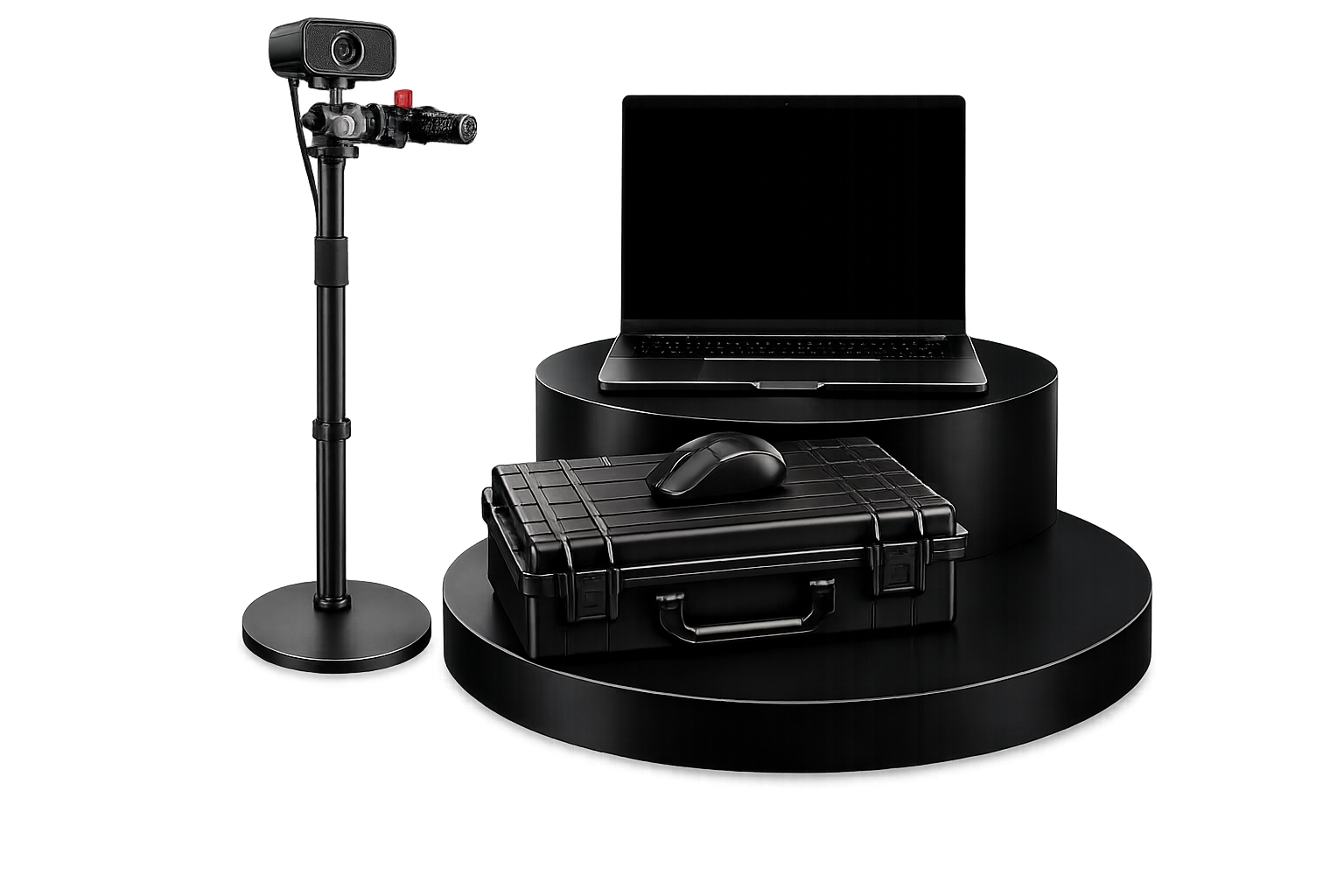
The AISIS software package uses microphone-based voice acquisition without attaching physical sensors to the person being interviewed. Its portable configuration supports suitable work at a security office, mine site, or another authorized location.
A field location still needs appropriate conditions. Background machinery, interruptions, microphone placement, and recording quality can affect the interview record. Consider language requirements and the person's understanding of each question before proceeding. Record limitations rather than treating every available recording as equally suitable.
AI assistance does not remove the examiner's responsibility for preparation, review, and reporting. The system supports professional judgment rather than replacing the investigator or making an autonomous finding.
Responsible use
An investigative aid, not proof of guilt.
Voice stress indicators do not, by themselves, establish deception or guilt. Anxiety, the significance of a question, interview conditions, and other contextual factors must be considered. Findings belong alongside the full interview, supporting evidence, and other investigative information.
Neither AISIS nor VASIS replaces physical security, inventory reconciliation, access controls, surveillance, or established incident-response procedures. Neither system should be used as an automatic hiring, access, or disciplinary decision. Security managers should establish authorized use, appropriate participation procedures, recording arrangements, and responsibilities for review before introducing examinations.
A clear report distinguishes the interviewee's account, the examiner's observations, and verified facts. Preserve that distinction when passing information to management or another investigative agency. An uncorroborated lead remains a question to investigate, not a finding to present as settled.
Examiner preparation
40-hour basic examiner certification.
VIPRE provides basic examiner certification covering system operation, examination procedures, question formulation, chart evaluation, and examiner responsibilities. Online training is available, with operational support for qualified users.
Discuss the team's investigative responsibilities, likely examination settings, and review process before deployment. Preparation should connect the equipment to a repeatable, documented investigative workflow. For a fuller discussion of the industry context, read Diamond Security Investigations: Where AISIS Fits.
AISIS builds on more than two decades of VIPRE VASIS voice-stress experience, with trained examiners directing each examination.
Frequently asked questions.
Can AISIS or VASIS prove that someone stole diamonds?
No. A voice stress indication does not establish theft, deception, or guilt. It may identify a topic for clarification, but any investigative lead must be considered alongside the complete interview and checked against independent evidence.
Where could our security team use the system?
AISIS has a portable, microphone-based configuration for suitable security offices, mine facilities, or other authorized interview locations. Recording quality, privacy, interruptions, language needs, and examiner preparation must be considered before an examination.
Does an interviewee need to wear physical sensors?
No. Voice information is acquired through a microphone, without attaching sensors, wires, or cuffs to the person being interviewed. Examinations still require trained personnel and suitable interview conditions.
How can we review the software before discussing deployment?
Request a link and password access to VIPRE's online AISIS informational presentation using the form below. A separate VASIS informational video is available on request. VIPRE reviews access requests before providing access.
Online software presentation
Request software presentation access.
Request a link and password access to VIPRE's online AISIS informational video. Use the questions field to describe the diamond-security applications your team would like to review.
A separate VASIS informational video is also available for teams reviewing VIPRE's established voice stress system. Note your interest in VASIS in the questions field when requesting access.
VIPRE reviews each access request. Submitting the form does not automatically provide access.