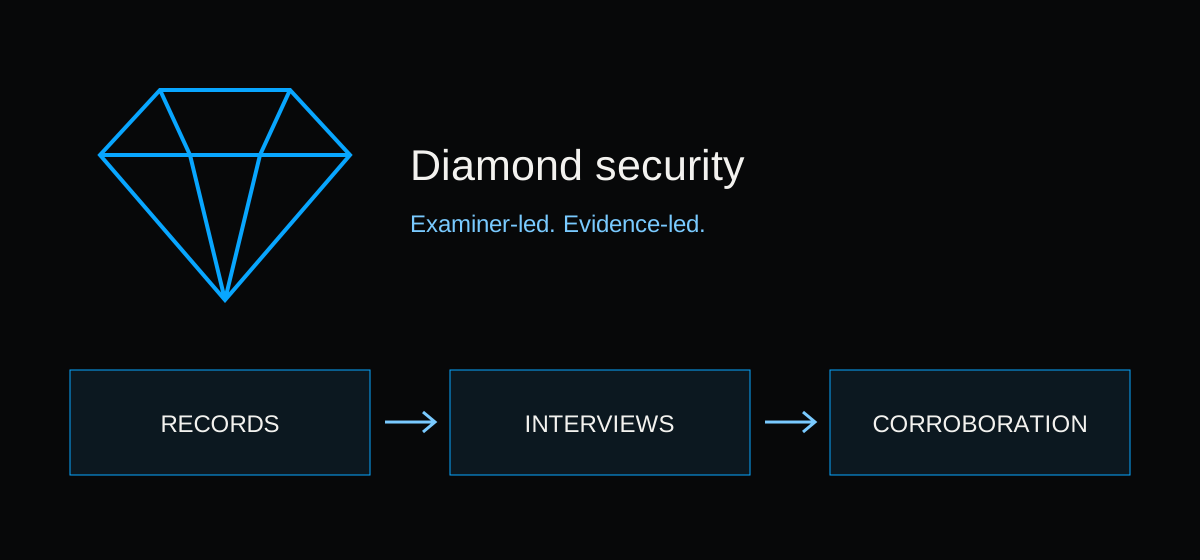
- Records
- Interviews
- Corroboration
Diamond security depends on more than detecting that something has gone missing. Investigators also need to reconstruct what happened, identify gaps in the record, and distinguish an administrative error from a security breach. A discrepancy may involve several shifts, multiple handovers, and people who each know only part of the story.
For security leaders in South Africa and across the wider southern African diamond industry, the practical question is where additional interview support belongs in that process. VIPRE's diamond-security briefing sets out potential applications for AISIS, including unexplained losses, access irregularities, and internal investigations. This article develops that framework into a practical discussion of preparation, questioning, review, and corroboration.
AISIS is an investigative support system for trained examiners. It presents stress-related vocal information for review during a structured interview. It does not identify a thief, establish a person's honesty, or replace independent evidence. Its proposed role is narrower: support disciplined clarification when an investigation has specific questions to resolve.
Start with the discrepancy, then define the interview
A useful investigation starts with a defined event. “Something is wrong with security” is too broad. An unexplained inventory difference, an incomplete transfer record, or an access entry outside an authorised period gives investigators a more precise starting point. Before interviewing anyone, establish what the records actually show and what remains uncertain.
This distinction protects the quality of the interview. A missing signature does not automatically mean a parcel was diverted. A late entry may reflect delayed administration rather than an unauthorised movement. Investigators should keep alternative explanations open while they work through the facts. That is particularly important when a person's role gives them access but no independent evidence links them to wrongdoing.
- Unexplained loss: identify the last verified record and the first confirmed discrepancy.
- Custody gap: establish which handover, document, or acknowledgement needs clarification.
- Access irregularity: compare the event with the person's assigned duties and permissions.
- Procedure failure: determine whether an exception was authorised, misunderstood, or undocumented.
These are potential interview topics, not allegations against a particular operation. VIPRE's broader investigative applications follow the same principle: define the issue before selecting the tool.
Keep physical security and traceability at the centre
Interview support belongs within a wider security programme. Access controls, inventory reconciliation, surveillance, documented transfers, and secure handling remain separate sources of information. A voice-related observation cannot repair an incomplete custody record or demonstrate that a particular diamond moved through a particular location.
The Antwerp World Diamond Centre's explanation of diamond-district security describes coordination among police, companies, building managers, and secured transport providers. It also describes cameras, access barriers, incident monitoring, and information sharing. The relevant lesson is that diamond security combines several controls and accountable organisations.
Traceability addresses another part of that picture. In its 2022 announcement about Tracr, De Beers described a platform for recording diamond provenance through the value chain. That is a different function from interviewing a person about an unexplained event. These sources provide industry context, not evidence that either organisation uses or endorses AISIS.
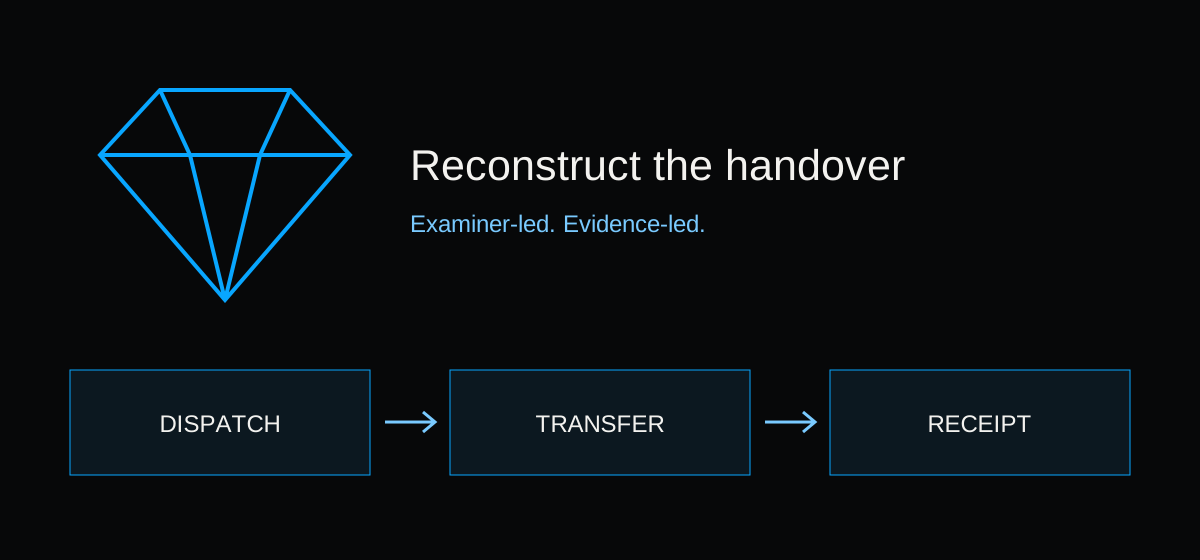
- Dispatch
- Transfer
- Receipt
Prepare the record before preparing the questions
Build a working timeline using the material the investigation is authorised to review. Mark each entry as confirmed, reported, or unresolved. Include the source behind it. If two records disagree, retain both accounts rather than silently choosing the one that fits the initial theory.
A practical preparation file might include transfer acknowledgements, inventory records, relevant access events, available surveillance, shift assignments, and prior statements. Not every case will have every source. Missing or unreliable material should be recorded as a limitation, because it affects what can fairly be asked and what can later be concluded.
Separate three questions: what does the record establish, what does the interviewee have direct knowledge of, and what needs verification elsewhere? A courier may explain a handover without knowing how a parcel was reconciled later. A security officer may explain an access event without having handled the material. Role-specific preparation keeps questions relevant.
VIPRE's discussion of examiner responsibility is central here. The professional directs the process, understands the case context, and decides whether the conditions support a useful examination.
Use clear questions and preserve the person's account
The purpose of a structured interview is to obtain information that can be checked. Begin by establishing what the person did, observed, or was told. Clarify unfamiliar operational terms and distinguish direct knowledge from assumptions. Do not turn the interview into a demand that the person explain every gap in the organisation's records.
Questions should address one issue at a time. A question about opening a container, changing a record, and speaking with a contractor combines separate events. Even a complete answer may be difficult to interpret. Narrow the topic and preserve the sequence so another reviewer can understand what prompted each response.
For example, an interviewer might first ask a person to describe their part in a transfer, then clarify who acknowledged receipt and how any exception was reported. These are illustrative discussion prompts, not a certified examination script. Formal examination wording and procedures belong with qualified examiners and the organisation's approved process.
Language and comprehension also matter. An unfamiliar accent, technical vocabulary, or interpretation requirement may complicate the exchange. Document those conditions and assess suitability before proceeding. Portability alone does not make a noisy production area or an interrupted interview an appropriate setting.
Review stress-related information in context
A person can experience stress because the interview concerns their livelihood, a colleague, an intimidating setting, or an event they find difficult to recall. A vocal indication therefore has more than one possible explanation. It must not become shorthand for dishonesty in an examiner's notes or a management briefing.
AISIS offers AI-assisted review, while the examiner remains responsible for interpretation. Review the question, the complete answer, the recording conditions, and the surrounding conversation. A clipped extract may omit an interruption or a clarification that materially changes how the exchange should be understood.
Research limits matter too. An NIJ-sponsored jail-setting study examined LVA and CVSA programmes and did not establish reliable deception detection for the tested task. It was not an AISIS diamond-industry evaluation. Findings about other systems cannot validate AISIS, and product-specific claims require evidence specific to the product and intended use.
The operational standard should remain restrained: describe what was observed, record relevant limitations, and identify the factual question requiring follow-up. Avoid numerical confidence claims or labels that imply the software has independently decided whether the person is truthful.
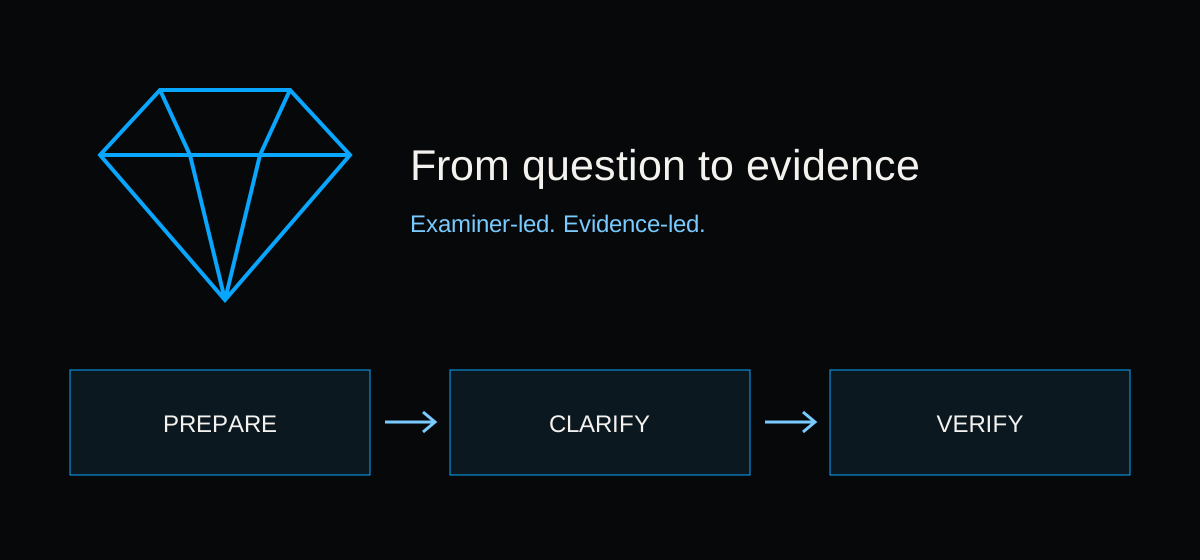
- Prepare
- Clarify
- Verify
Turn follow-up topics into verifiable actions
An interview becomes operationally useful when it produces a specific next action. “Review this person further” is vague. “Check who acknowledged the transfer at the receiving point” identifies an issue and a potential source. Record why the action matters and what result would support or weaken the working explanation.
Consider a hypothetical inventory discrepancy after a shift change. A trained examiner conducts an authorised interview about the handover. A response requires clarification, and the person describes an undocumented change in responsibility. The next step is to examine the handover records and speak with the relevant people. The software output does not establish that the change occurred or that it caused a loss.
- Check the account against available records and preserve contradictory information.
- Seek corroboration from a source that does not simply repeat the original statement.
- Distinguish an interview observation from a verified event in the report.
- Record unresolved issues instead of forcing a final explanation.
The same discipline applies if a person admits a procedure breach. Establish what happened, preserve the account, and test the surrounding facts. An admission to an administrative shortcut is not automatically an admission to theft or collusion.
Evaluate a defined use before expanding deployment
A security team considering AISIS should begin with a defined operational need. Specify which cases may be suitable, who authorises an examination, who conducts it, and who reviews the report. The organisation should establish its applicable employment, privacy, recording, and investigative requirements with its own qualified advisers before introducing a new process.
A limited evaluation should examine the quality of the work, rather than treating the number of stress indications as a success measure. Useful review questions include whether interviews were properly prepared, recordings were usable, limitations were documented, and follow-up leads were independently checked. Any claim that the system reduces losses or improves investigative outcomes needs a defensible evaluation of those outcomes.
Keep reports accessible only to authorised people and define how interview records will be retained and reviewed. Supervisors should be able to distinguish what the examiner observed, what the interviewee said, and what independent evidence established. That separation makes the record more useful for later review.
Make the report understandable to another reviewer
Before expanding an evaluation, agree how a supervisor will assess the resulting case file. The reviewer should be able to follow the reasoning without having attended the interview or operated the software. A report that depends on unexplained colours, chart labels, or the examiner's memory is difficult to assess. Record the underlying question and the limits of the observation in ordinary language.
For a handover discrepancy, that might mean recording the disputed transfer, the interviewee's account of their responsibility, the point requiring clarification, and the records requested afterwards. The final entry should state what those records actually established. If a lead could not be checked because material was missing, say so. An unresolved lead remains unresolved even when the original interview seemed significant.
Evaluation should also examine cases where the initial concern was not supported. Those cases can reveal poor question design, incomplete preparation, or assumptions about normal working practices. They help the team judge whether its process treats alternative explanations fairly. Review should therefore consider the quality of the overall investigation rather than highlighting only interviews that appeared to support a suspicion.
Where several departments participate, assign responsibility for the follow-up. Security may request access records, operations may explain a handling exception, and an authorised manager may review the final account. Clear ownership prevents an interview observation from circulating as an allegation before anyone has completed the factual checks.
How VIPRE supports diamond-security teams
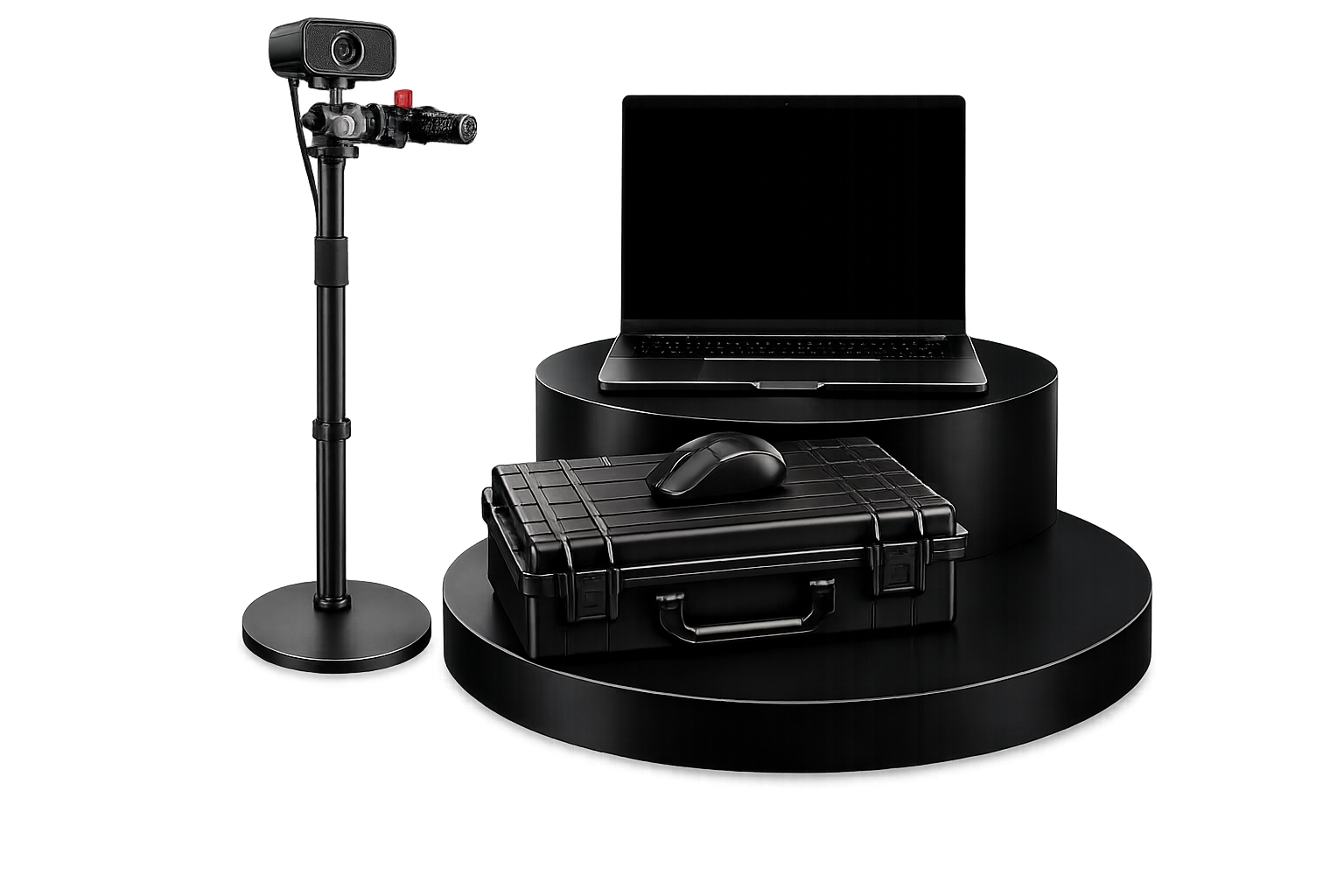
VIPRE presents AISIS as a portable system for structured, examiner-led interviews, including potential work involving employees, contractors, couriers, vendors, and security personnel. Its AISIS overview explains the platform, while the diamond briefing connects that approach to losses, handling discrepancies, access events, and suspected internal collusion.
VIPRE also provides 40-hour examiner certification covering system operation, examination procedures, question formulation, chart evaluation, and examiner responsibilities. Teams can discuss operational support alongside their training needs. Certification is part of preparation, not a guarantee that an examination will resolve a case.
To assess suitability for your operation, request access to the diamond-security presentation or contact VIPRE with the investigative issues your team needs to address. The starting point is a clear use case and a trained examiner who can explain how any observation will be checked.
Frequently asked questions
Can AISIS determine whether an employee stole diamonds?
No. AISIS does not independently establish theft, truthfulness, or deception. Any stress-related indication must be considered in context and any lead tested against independent evidence. Investigative conclusions remain the responsibility of qualified people.
Where could AISIS fit in a diamond-security investigation?
Potential applications include structured interviews about unexplained losses, inventory differences, access irregularities, handling procedures, and suspected collusion. Suitability depends on the issue, the available records, examiner competence, and the organisation's approved procedures.
Does this article describe a diamond company's use of AISIS?
No. This article describes potential applications and a proposed investigative workflow. It does not report a customer deployment, endorsement, operational result, or partnership with any diamond company.
What preparation should a diamond-security team discuss with VIPRE?
The team should discuss its investigative needs, examiner training, interview environment, recording requirements, language needs, and reporting expectations. VIPRE's diamond briefing also provides a route to request access to an informational presentation.
References
- Antwerp World Diamond Centre: diamond-district security coordination, access controls, and incident reporting. Linked in the section on physical security.
- De Beers Group, 5 May 2022: announcement describing Tracr's provenance function. Linked in the section on traceability.
- National Institute of Justice: Assessing the Validity of Voice Stress Analysis Tools in a Jail Setting. Linked in the discussion of research limits.
- VIPRE Technology Group: diamond-security briefing, AISIS product overview, and examiner-certification information. Linked in the relevant operational sections.