
Voice stress analysis is a way of reviewing speech for acoustic changes that may accompany stress, cognitive effort, emotion, or other conditions affecting vocal production. In an investigative setting, it is most useful as a structured review aid: it can help a trained examiner notice a response or topic that deserves careful follow-up. It does not establish that a person is lying, telling the truth, guilty, or innocent.
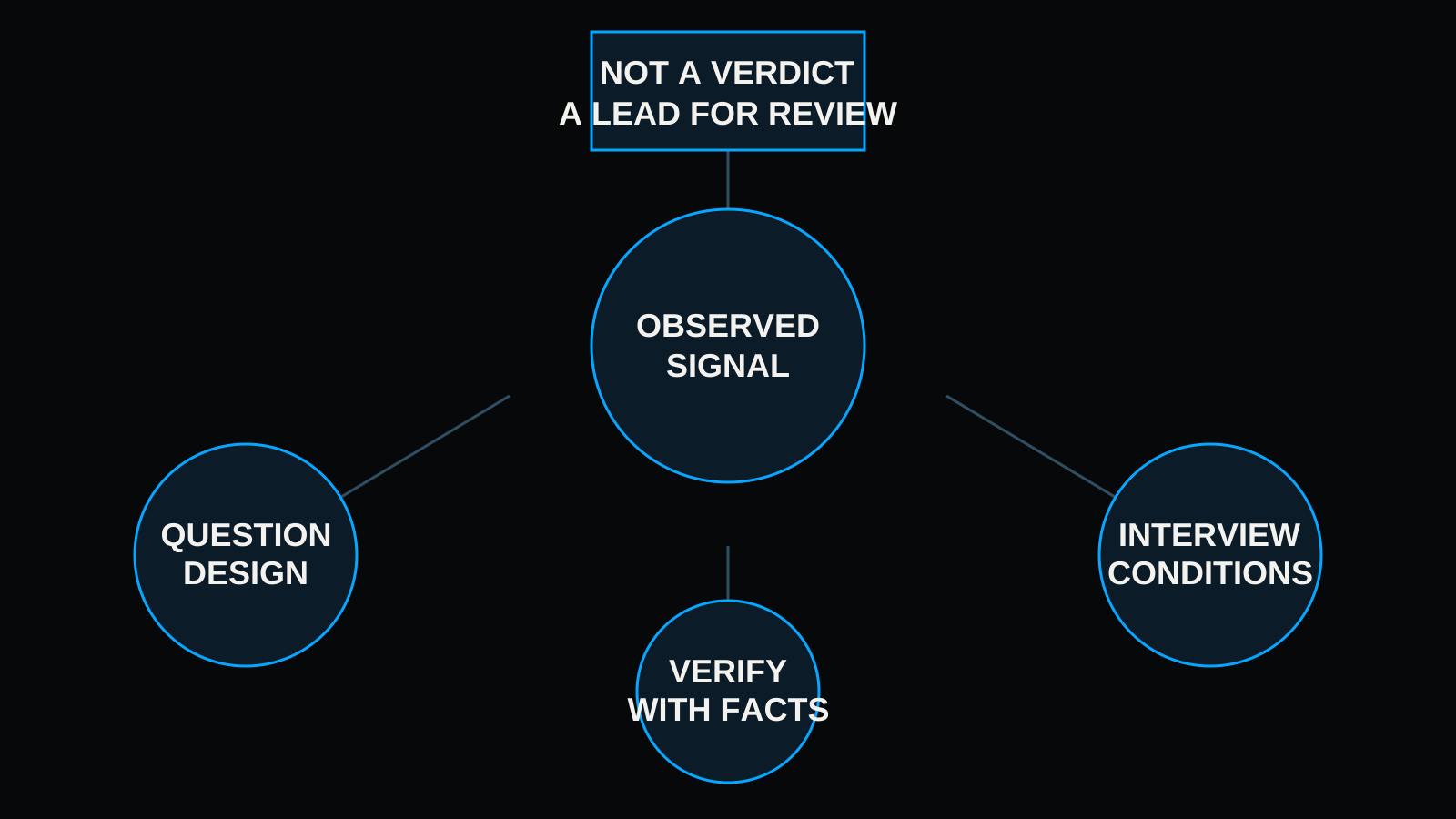
That boundary matters. A person may show stress because a question is consequential, unexpected, embarrassing, traumatic, confusing, or simply difficult to hear. Another person may remain composed for reasons that have nothing to do with the accuracy of an answer. The responsible use of voice-based information is therefore not to announce a verdict. It is to direct attention, improve documentation, and test a lead against the rest of the investigation.
This guide explains what voice stress analysis can reasonably contribute, where its limits begin, and what a disciplined examination process looks like for trained investigative professionals, agencies, and examiners.
What Voice Stress Analysis Examines
Speech is produced through breathing, vocal-fold vibration, resonance, articulation, timing, and learned patterns of speaking. Those processes are affected by many ordinary influences, including fatigue, illness, room acoustics, language, emotion, physical exertion, medication, and the pressure of an interview. Voice stress analysis examines features in recorded speech that may shift with those influences.
Researchers commonly study acoustic features such as fundamental frequency, intensity, timing, speech rate, spectral characteristics, and measures of voice quality. These are measurements of sound, not direct measurements of truthfulness. The fact that a feature changes can be meaningful to review, but the change does not identify its cause on its own.
Recent research supports both the promise and the caution. A 2025 systematic review of acoustic correlates found evidence that some speech features can be associated with stress, negative emotion, and cognitive load, while also reporting that results vary across features and conditions. A separate 2025 review and meta-analysis of vocal fundamental frequency found a potential relationship with stress but noted substantial heterogeneity and publication-bias concerns. The practical lesson is simple: speech can carry useful stress-related information, yet no single vocal pattern should be treated as a universal or self-explanatory marker.
Stress Is Not Deception
Stress and deception can occur together, but they are not interchangeable. An innocent person can experience strong stress under scrutiny. A person can also be deceptive without displaying a consistent vocal pattern that an examiner can reliably interpret in isolation. This is why careful language is not a cosmetic choice. It protects the subject, the investigation, and the credibility of the examiner.
The National Institute of Justice has reported on evaluations of earlier commercial voice-stress systems. Its 2002 final report concluded that the systems tested recognized stress through voice analysis, while the claim that they detected deception had not been proven. A later NIJ field-study article similarly cautioned that it was unclear whether the technology could distinguish deception-related stress from other forms of stress. Those findings concern the systems and study settings reviewed, not VIPRE VASISSM or AISISSM. They remain important because they show why an examiner must never turn an observed indication into a finding of deception without independent support.
For agencies, the operating rule should be direct: treat a stress-related indication as a prompt to clarify, not as proof. Ask whether the question was clear. Check whether the response can be compared fairly with the speaker’s other responses. Consider whether the interview environment, language, audio quality, or personal circumstances might explain the change. Then verify the issue through records, witnesses, digital evidence, or a better-framed follow-up question.
Why Structure Matters Before Any Analysis
The strongest safeguard in voice stress work happens before the recording is reviewed. A poorly framed interview cannot be repaired by a graph or an algorithm. Trained examiners begin with clear objectives, precise questions, clean audio, and a documented process.
Question design deserves particular care. Each question should address one knowable issue, use language the interviewee understands, and avoid combining multiple allegations or assumptions. A vague or compound question can increase uncertainty and pressure, which may create vocal changes that say more about the question than the underlying fact. Neutral and comparison material, where appropriate to the chosen procedure, can help the examiner understand ordinary variation in the individual’s speech during that session.
Interview conditions matter as well. Background noise, clipped recordings, interruptions, a poor microphone position, a speaker’s health, interpretation needs, and distress associated with a traumatic event can all affect voice production. A responsible record notes those conditions instead of hiding them. When the recording is inadequate for review, the correct professional decision may be to improve the conditions or not rely on that segment at all.
The examiner’s role is also active, not passive. The examiner decides what to ask, how to phrase follow-up questions, which response segments are suitable for review, and how to document the limits of the conclusion. Technology can organize information, but it cannot supply the case context or professional judgment needed to interpret it responsibly.
How A Responsible Review Proceeds
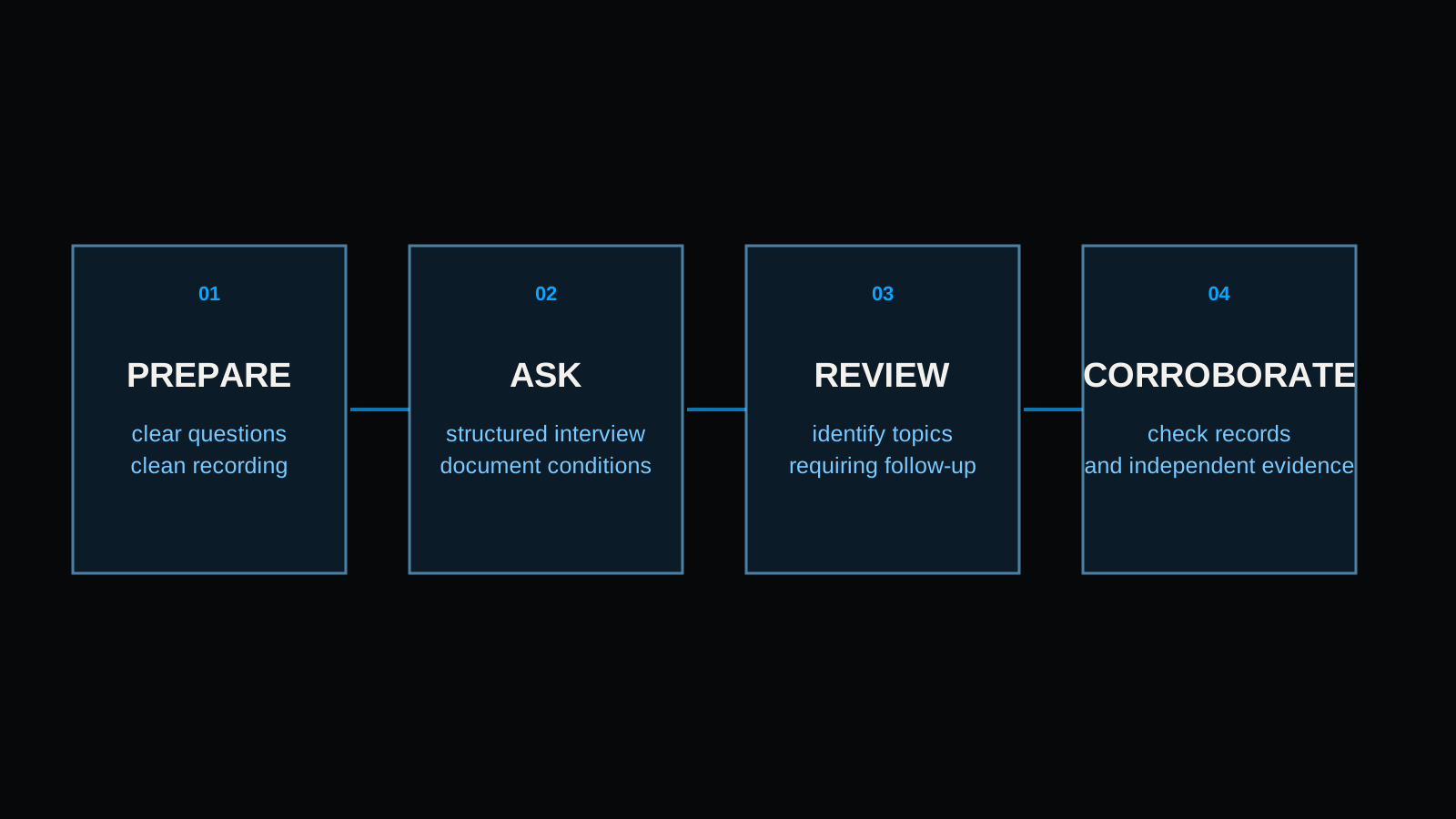
In practice, a disciplined voice-stress review follows a sequence. First, the examiner prepares: define the issue, confirm the recording environment, and develop clear question wording. Second, conduct the interview in a manner that allows the speaker to understand and answer each question. Third, review the recording and any displayed indicators for topics that may merit clarification. Fourth, corroborate. Compare the topic against case facts and obtain independent evidence before drawing an investigative conclusion.
Preparation
Clarify the purpose of the interview and the questions that can realistically be answered. Confirm that the audio capture is appropriate and that the process fits applicable law, policy, and the individual’s circumstances. Preparation reduces avoidable ambiguity before it becomes a misleading signal. A prepared examiner also knows which sources of independent evidence may later confirm or challenge a lead.
Questioning
Use a calm, structured approach. Allow time for comprehension and a complete response. If a response is unclear, resolve the ambiguity in the interview rather than trying to infer its meaning later from vocal features. A respectful process also produces a better record for supervisory review. When a question needs refinement, it is better to ask a clearer question than to force an interpretation from an unclear answer.
Review
Look for relative changes across the full session, not a dramatic moment in isolation. Review the wording, timing, delivery, recording quality, and surrounding conversation. An observed shift may suggest that a topic deserves another question. It does not answer that question by itself. The review should make the next investigative step more focused, not make the examiner more certain than the record permits.
Corroboration
Test any follow-up lead through evidence outside the voice-stress process. That may include documents, video, physical evidence, location information, digital records, witness accounts, or a second interview conducted under better conditions. Corroboration is the point at which an investigative lead either becomes useful or falls away. If external evidence does not support the lead, the responsible result is to document that limitation and move on.
What Training Adds
Training gives examiners a repeatable way to prepare, conduct, review, and document an examination. It helps practitioners recognize when a question is poorly formed, when audio is not suitable, when a result should be set aside, and how to communicate limits without overstating the technology.
For agencies, training also creates consistency. Supervisors can review whether a procedure was followed, whether the recording supports the report, and whether any lead was tested with independent evidence. That consistency is more valuable than a dramatic claim because it makes the work more transparent and defensible. It also gives agencies a practical quality-control standard that does not depend on a single output or examiner impression.
Qualified practice includes continuing education. Speech research, recording technology, legal standards, and operational policy change. Examiners who keep their skills current are better equipped to distinguish a useful lead from an attractive but unsupported inference. They are also better able to explain, in plain and accurate terms, why a conclusion is limited by the conditions of the interview.
How VIPRE Supports Examiner-Led Work
VIPRE systems are designed to support trained examiner-led review, not to replace it. AISISSM and VASISSM can help organize recorded responses and preserve a structured examination record, while the examiner retains responsibility for question selection, response review, follow-up, and reporting.
That design aligns with the responsible limits described here. A stress-related indication is a reason to look closer, not a declaration about truthfulness. The most valuable outcome is a better-organized next step: clarify a topic, check a record, seek corroboration, or document why a result should not be relied upon.
Teams considering a program should evaluate the full operating model, not just the software screen. Ask what training is provided, how recordings and notes are preserved, how follow-up is documented, what support exists for quality control, and how the system keeps the examiner in control. The relevant standard is disciplined investigative practice.
Common Questions
Can Voice Stress Analysis Tell Whether Someone Is Lying
No. Voice stress analysis can identify speech patterns that may merit follow-up, but it cannot independently establish deception or truthfulness. Any potentially meaningful indication needs context and independent corroboration.
What Can Cause A Voice Stress Indication
Many factors can influence speech, including stress, emotion, cognitive effort, fatigue, health, language, environmental conditions, question wording, and audio quality. That is why trained review considers the complete interview rather than treating a single response as conclusive.
Is Voice Stress Analysis Evidence By Itself
It should be treated as an investigative aid, not as standalone proof. A responsible examiner uses it to identify issues for clarification and then tests those issues through records, witnesses, digital evidence, or other independent sources.
Do Trained Examiners Still Make The Decisions
Yes. The examiner is responsible for the interview structure, question design, recording conditions, review, follow-up, and report. Technology can organize information, but it does not replace professional judgment or investigative corroboration.
References
- National Institute of Justice. Investigation and Evaluation of Voice Stress Analysis Technology, Final Report (2002). https://nij.ojp.gov/library/publications/investigation-and-evaluation-voice-stress-analysis-technology-final-report
- National Institute of Justice. Voice Stress Analysis: Only 15 Percent of Lies About Drug Use Detected in Field Test. https://nij.ojp.gov/topics/articles/voice-stress-analysis-only-15-percent-lies-about-drug-use-detected-field-test
- Schewski, L., et al. Measuring negative emotions and stress through acoustic correlates in speech: A systematic review. PLOS ONE (2025). https://pubmed.ncbi.nlm.nih.gov/40705747/
- Veiga, D. L., et al. The Fundamental Frequency of Voice as a Potential Stress Biomarker: A Systematic Review and Meta-Analysis. Stress and Health (2025). https://pubmed.ncbi.nlm.nih.gov/41102940/
- Giddens, C. L., et al. Vocal indices of stress: a review. Journal of Voice (2013). https://pubmed.ncbi.nlm.nih.gov/23462686/